
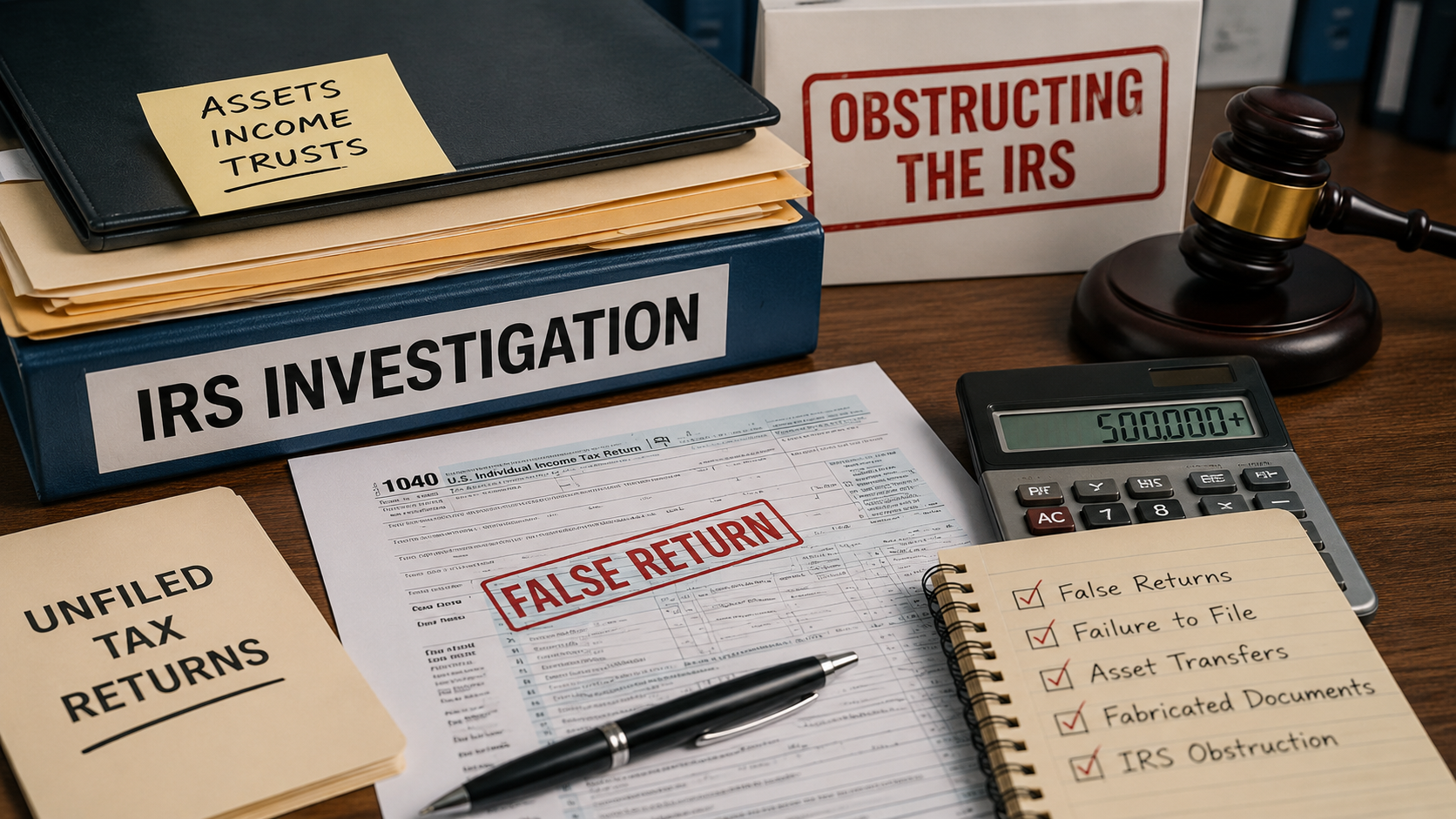
A recent Virginia federal tax case is a reminder that trying to outmaneuver the IRS can make a serious tax problem much worse. According to the case details, a taxpayer filed false returns, received refunds he was not entitled to, failed to file returns for later years, and then attempted to interfere with IRS collection efforts.
What Happened in the Virginia Tax Case?
According to court records, the taxpayer filed false tax returns and received refunds he was not entitled to. After the IRS attempted to recover the money, he took additional steps that authorities said were designed to interfere with collection.
Those actions included transferring property into a trust, directing income into trust bank accounts, and submitting fabricated documents in an attempt to stop or delay IRS collection efforts.
The case also involved multiple years of unfiled tax returns, despite the taxpayer earning substantial income during that period. A federal jury convicted him of obstructing the IRS and willfully failing to file tax returns.
Why This Case Matters
This case matters because there is a major difference between legal tax planning and illegal tax evasion or obstruction. Taxpayers are allowed to use lawful tax planning strategies, but hiding assets, filing false returns, submitting fabricated documents, or refusing to file required returns can create serious civil and criminal consequences.
What may begin as an unpaid balance, a refund issue, or several years of unfiled returns can become much more serious when a taxpayer takes steps to conceal income, move assets, or interfere with IRS collection.
What Taxpayers and Business Owners Can Learn
The lesson is simple: the solution is not concealment. The solution is addressing the tax problem directly and strategically.
Warning signs that a tax problem needs immediate attention include:
- unfiled tax returns
- IRS collection notices
- large unpaid tax balances
- refund claims that may not be supported
- asset transfers after IRS collection begins
- income being directed into accounts to avoid collection
- fabricated or inaccurate documents
- concerns about liens, levies, or garnishments
Why Unfiled Returns Make the Problem Worse
Unfiled tax returns can create serious complications. The IRS may file substitute returns, assess balances without all available deductions or credits, begin collection activity, and treat continued non-filing as a more serious compliance issue.
When a taxpayer earns income but repeatedly fails to file required returns, the issue can move beyond a simple filing problem. If the facts suggest intentional noncompliance, concealment, or obstruction, the risk can increase significantly.
What Should You Do Instead?
If you have unfiled returns, IRS notices, large balances, or concerns about asset exposure, the first step is to get organized and understand the facts. That usually means identifying the missing tax years, gathering income records, reviewing IRS notices, and determining what has already been assessed or collected.
TR360 helps individuals, landlords, and business owners review serious tax problems, understand compliance issues, and determine practical next steps before the situation escalates further.