
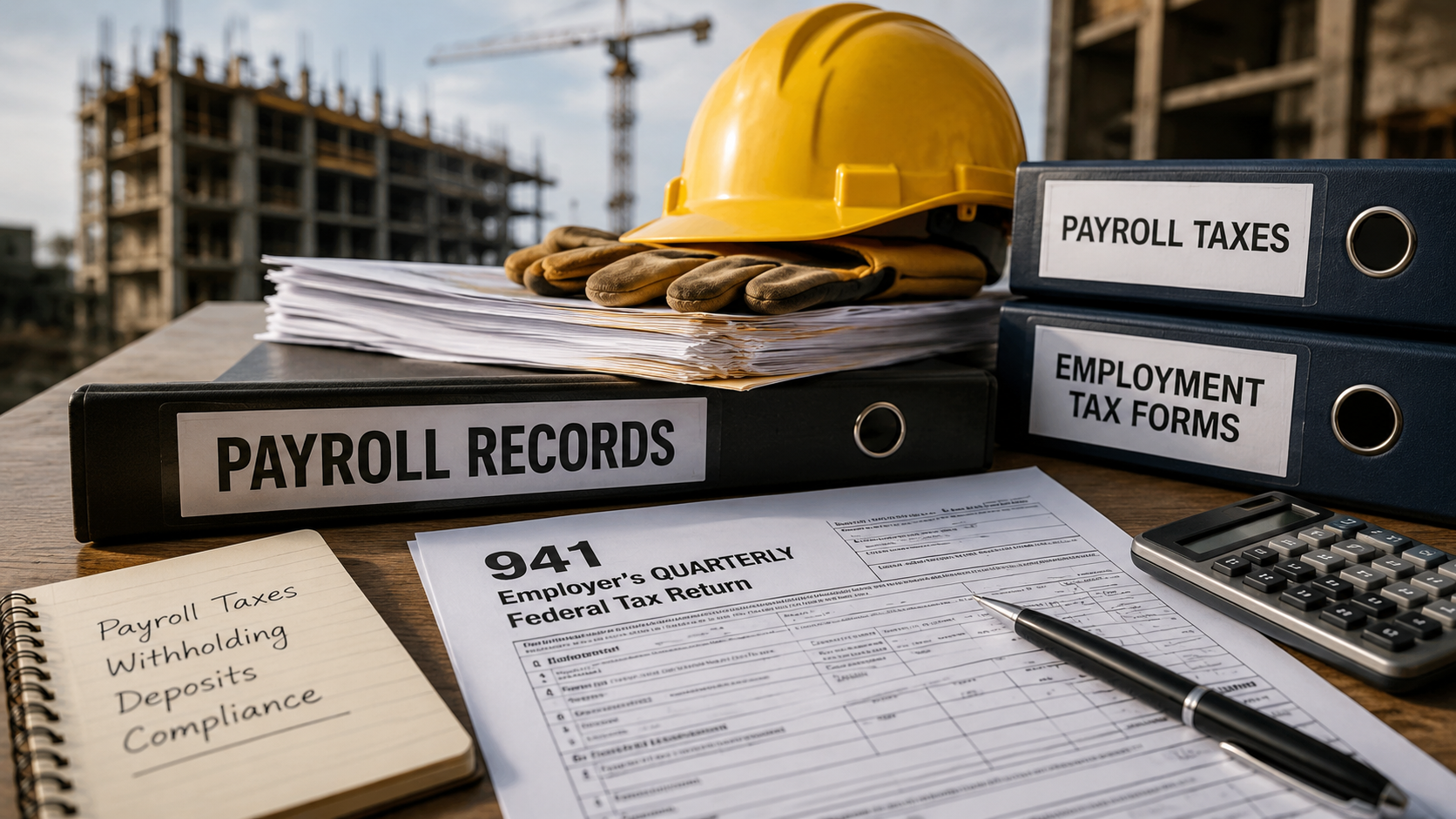
A recent federal case out of Orlando is a strong reminder that off-the-books payroll can create serious tax problems. According to the Department of Justice, a defendant pleaded guilty for participating in a years-long payroll scheme involving construction workers, shell companies, check cashing, and cash payments. The government reported more than $38 million in total losses.
What Happened in the Florida Payroll Tax Case?
According to the Department of Justice, the scheme involved an off-the-books cash payroll system used in the construction industry. Prosecutors said the arrangement helped contractors and subcontractors avoid payroll taxes and workers’ compensation requirements.
The case involved shell companies, check cashing, and cash payments. The government alleged that checks from subcontractors were cashed through the scheme, fees were charged for the service, and workers were then paid in cash without proper payroll reporting.
Why This Case Matters
This case matters because payroll taxes are not optional. When a business pays workers in cash without proper reporting, it may fail to withhold and pay employment taxes, file payroll tax returns, issue proper tax forms, and correctly classify workers.
Even when a business owner does not set out to commit a crime, payroll tax problems can escalate quickly. Unpaid payroll taxes may lead to IRS notices, penalties, interest, liens, levies, and possible personal liability.
Why Payroll Taxes Are Different
Payroll tax debt is especially serious because part of the money withheld from employee wages is considered trust fund tax. These amounts are supposed to be held and paid over to the government. When those taxes are not paid, the IRS may investigate who was responsible for collecting, accounting for, and paying them.
In some cases, the IRS may assess the Trust Fund Recovery Penalty against owners, officers, or other responsible people in the business. That means the IRS may try to collect certain unpaid payroll taxes from individuals personally, not just from the business.
What Business Owners Can Learn
Business owners should be careful when paying workers in cash, using subcontractors, or relying on someone else to handle payroll. A business should understand:
- whether workers are properly classified
- whether payroll tax returns are being filed
- whether employment taxes are being withheld and paid
- whether payroll deposits are current
- whether W-2s, 1099s, or other required forms are being issued
- whether payroll records support what was reported
A common mistake is assuming that informal cash payments are harmless. In reality, poor payroll practices can create tax exposure for the business and, in some cases, for individuals connected to the business.
What Should You Do If You Are Behind on Payroll Taxes?
If you are behind on payroll tax deposits, have unfiled payroll tax returns, paid workers in cash, or received IRS notices, do not ignore the problem. The sooner the issue is reviewed, the more clearly you can understand what returns are missing, what balances exist, and what options may be available.
TR360 helps business owners review payroll tax problems, communicate with the IRS, file missing returns, request penalty relief when available, and create a plan to get back into compliance.